Uganda may be reconsidering its approach to the conflict in eastern Democratic Republic of Congo (DRC) and could consider engaging with a new political-military alliance led by former Congolese president Joseph Kabila.
Information emerging from Kampala suggests that Uganda’s security leadership is increasingly concerned about attacks against civilians in Ituri, North Kivu and South Kivu provinces.
The concerns also extend to continued attacks by the Allied Democratic Forces (ADF), particularly around Isiro, where the group’s leader, Musa Baluku, is reportedly based.
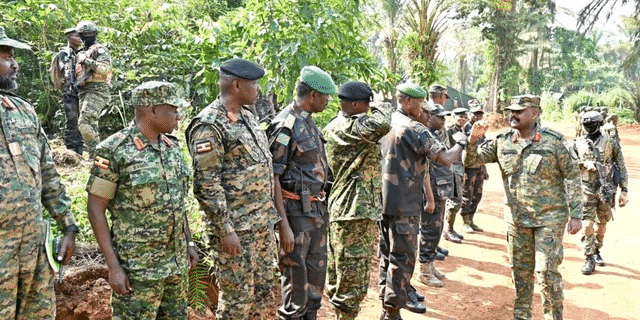
Uganda’s Chief of Defence Forces, General Muhoozi Kainerugaba, has indicated that the UPDF intends to pursue Baluku in the area.
Uganda’s concerns over security in eastern Congo
Beyond the ADF threat, Kampala is reportedly increasingly concerned about alleged human rights violations committed by the Armed Forces of the Democratic Republic of Congo (FARDC) and allied armed groups against civilians, particularly members of the Hema and Tutsi communities.
Uganda’s position is that military cooperation with Kinshasa in fighting the ADF should not be interpreted as support for alleged abuses committed by Congolese forces and their allies.
Against this background, Kampala is reportedly reassessing its position towards the Front for the Refoundation of the Nation (FRN), an alliance led by Kabila.
Some officials in Uganda reportedly view FRN as a political and military actor with influence in parts of North Kivu and South Kivu.
Uganda could therefore consider engaging with the alliance as part of efforts to establish a lasting political and security arrangement in eastern Congo.
Such a development could mark a significant shift in Kampala’s approach to the Congolese conflict, particularly given its existing military cooperation with the government in Kinshasa.
Kampala wants Kinshasa and FRN at the negotiating table
Uganda reportedly believes that a lasting solution to the crisis in eastern Congo should involve direct political dialogue between the Congolese government and FRN.
The negotiations held in Doha and Washington, D.C., have raised questions about the extent to which regional concerns and the interests of other communities affected by the conflict have been adequately addressed.
A broader national dialogue involving the different parties and communities affected by the crisis could provide a more comprehensive framework for resolving the conflict.
Regional organisations, particularly the East African Community (EAC) and the Southern African Development Community (SADC), could also play an important role in facilitating such discussions.
FRN’s emergence changes the political landscape
The emergence of FRN has introduced another dimension to the political and military dynamics of the conflict in eastern Congo.
The alliance brings together different political and military actors under a new structure, with Kabila at the centre of its political leadership.
Its emergence raises questions about whether existing diplomatic initiatives can deliver a sustainable settlement without taking into account the changing balance of power and the interests of the new alliance.
Uganda’s position remains unclear
Uganda continues military operations against the ADF in eastern Congo alongside Congolese government forces under Operation Shujaa.
However, the possibility of Kampala opening political or security channels with FRN could introduce a new dimension to regional diplomacy and relations between Uganda and the government of President Félix Tshisekedi.
As of November 27, 2026, no official announcement had confirmed that Uganda had decided to establish cooperation with FRN.
The reported possibility therefore remains unconfirmed.