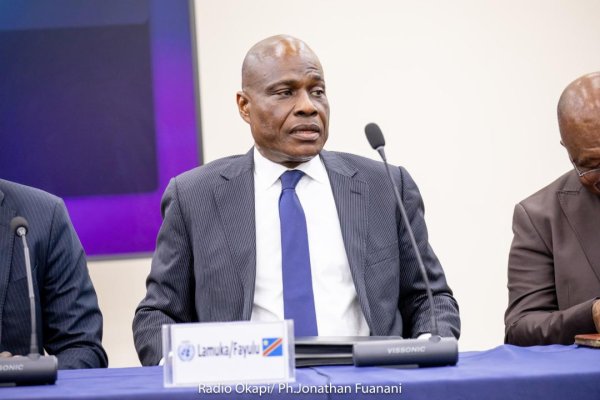
Congolese opposition politician Martin Fayulu has called for former President Joseph Kabila and AFC/M23 leader Corneille Nangaa to be invited to the planned national dialogue aimed at addressing the political and security crisis in the Democratic Republic of Congo (DRC).
Fayulu, who leads the Lamuka coalition, made the remarks while in Paris, France. He argued that both politicians have played significant roles in the country’s political history and that lasting solutions to the DRC’s problems require the participation of different political actors.
Although Kabila is no longer president, Fayulu said his 18 years at the helm of the country make him an important figure in discussions about the DRC’s future.
Kabila served as president from 2001 to 2019 before being succeeded by Félix Tshisekedi.
Fayulu also argued that if the government in Kinshasa continues to accuse Kabila of supporting AFC/M23, he should be given an opportunity to attend the dialogue and respond to the allegations.
“Kabila led this country. Whatever he is today, he is still there. They say that he provides weapons and supports AFC/M23; he should come and tell us why he is doing it and what the problem is.”
Regarding Corneille Nangaa, Fayulu said he should also be given an opportunity to explain his position and the reasons that led him to take up an armed struggle.
Nangaa, a former president of the Independent National Electoral Commission (CENI), now leads the AFC/M23 coalition, which the government in Kinshasa accuses of destabilizing the country and collaborating with Rwanda. Nangaa and AFC/M23 reject the accusations and deny being responsible for all the security problems affecting eastern DRC.
Fayulu believes that Congolese people themselves should play a central role in finding solutions to the country’s crisis, with different political and social groups given an opportunity to present their views on the future of the DRC.
The Congolese government, however, has continued to oppose the participation of Kabila and Nangaa in national dialogue, accusing them of taking up arms or supporting armed groups opposed to the Kinshasa government.
President Félix Tshisekedi recently announced that he would address the Congolese people to explain how the planned national dialogue would be organized and conducted.
The dialogue is expected to help find solutions to the political and security challenges that have affected the DRC for years, particularly the continuing conflict and instability in the eastern part of the country.
Rwandatribune.rw