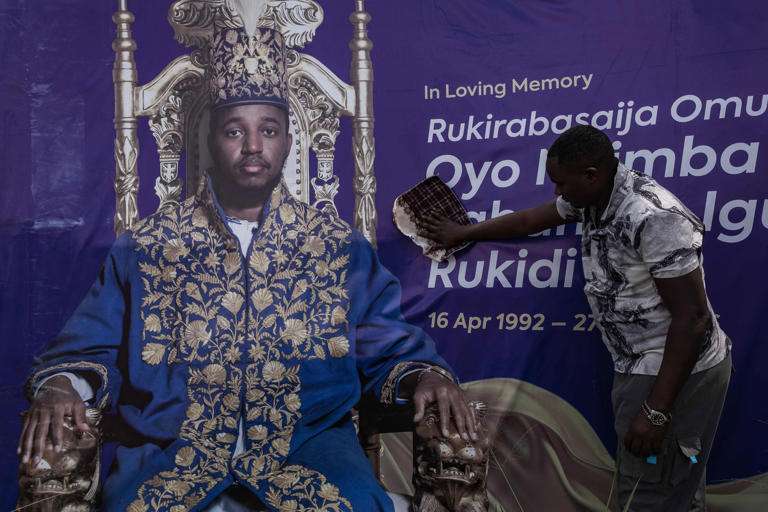
UGANDA — The Tooro Kingdom is facing uncertainty following the death of King Oyo Nyimba Kabamba Iguru Rukidi IV, with a succession dispute emerging between those calling for the next king to be chosen according to Tooro customs and those arguing that the late king’s son has the strongest claim to inherit the throne.
King Oyo died on August 27, 2026, bringing to an end the reign of a monarch who had ruled the kingdom for many years after ascending to the throne at a very young age.
Following his death, kingdom officials and elders representing Tooro clans began the process of identifying his successor. During that process, Prince Edward Rukidi Kijanangoma, a prominent member of the royal family, was announced as the person selected to become the next king.
However, the situation quickly became more complicated after members of King Oyo’s immediate family claimed that a document could potentially change the course of the succession process.
A 2022 will raises questions
Queen Mother Best Kemigisa, King Oyo’s mother, together with his sister Princess Ruth Komuntale, have said that King Oyo left behind a will written in 2022 in which he reportedly identified a biological son.
According to the claims, the child was intended to succeed him.
The controversy is partly linked to the fact that the boy had not been widely known to the public, leading some people to describe him as King Oyo’s “secret son” following the monarch’s death.
If the child is formally recognised as King Oyo’s son and the alleged will is authenticated and accepted, the development could challenge the earlier decision to install Kijanangoma as the next king.
Where does Kijanangoma stand?
Prince Edward Rukidi Kijanangoma is a member of the Tooro royal family and had emerged as a leading candidate to continue the kingdom’s traditional leadership following King Oyo’s death.
Those supporting his succession point to Tooro customs and the role traditionally played by clan elders and other traditional authorities in determining who should occupy the throne.
Supporters of Oyo’s alleged son, however, argue that the late king’s wishes should not be disregarded, particularly if the document in question is found to be legally and traditionally valid.
Funeral plans add pressure
The dispute has emerged at a particularly sensitive moment, with King Oyo’s funeral ceremonies scheduled for September 12, 2026.
In Tooro tradition, succession and royal ceremonies are closely connected, making the question of who will succeed the late king particularly sensitive as preparations for his burial continue.
Ugandan authorities and representatives of the kingdom have reportedly been involved in efforts to bring the competing sides together and prevent the succession dispute from creating deeper divisions among the people of Tooro.
For now, discussions are continuing, meaning the announcement of Kijanangoma as successor has not necessarily brought the succession controversy to an end.
The central question remains: Will the Tooro throne go to Prince Edward Rukidi Kijanangoma, or will King Oyo’s alleged will pave the way for his son to succeed him?
The answer could have significant implications not only for the future leadership of the Tooro Kingdom but also for how traditional succession customs are interpreted and applied in the years ahead.