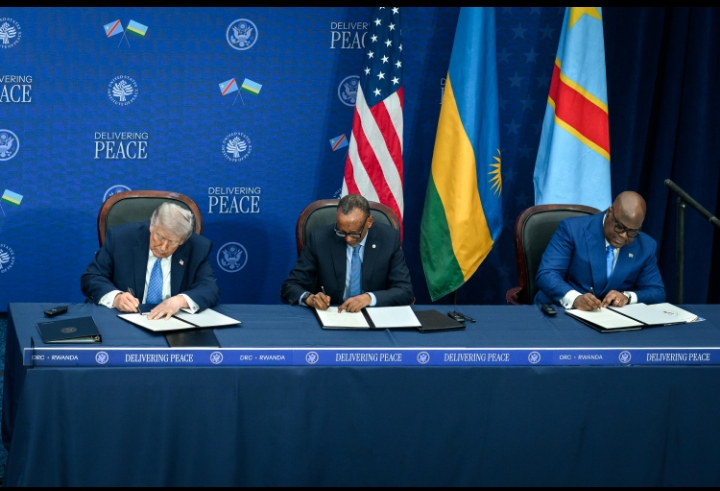
One year has passed since Rwanda and the Democratic Republic of the Congo (DRC) signed the Washington Peace Agreement, a landmark deal intended to promote peace and security in the Great Lakes region. However, a new report by the Peace Agreement Barometer (PAB) indicates that much of what was agreed upon has yet to be implemented.
According to the report, only 35% of the agreement has been implemented, meaning that nearly 65% of the commitments remain outstanding, particularly those related to restoring security in eastern DRC and addressing the threat posed by armed groups.
What Was the Washington Agreement Meant to Achieve?
The agreement was signed on June 27, 2025, by the foreign ministers of Rwanda and the DRC before receiving the endorsement of the two countries’ presidents.
Its main objectives included:
Reducing tensions between Rwanda and the DRC;
Restoring peace and security in eastern DRC;
Establishing mechanisms to address armed groups, including the FDLR;
Promoting economic cooperation and investment between the two neighboring countries.
Limited Progress Recorded
The PAB report notes that only a small number of the 30 planned implementation measures have been completed.
Most of the progress has been made in establishing institutions responsible for monitoring the implementation of the agreement and strengthening diplomatic cooperation between the two governments.
However, key security-related commitments and concrete developments on the ground remain significantly behind schedule.
What Is Slowing Down Implementation?
The report identifies several factors that continue to delay the implementation of the agreement, including:
Ongoing fighting in eastern DRC;
Persistent accusations among the parties of violating ceasefire commitments;
Delays in implementing long-term peacebuilding measures.
AFC/M23 Remains a Major Challenge
One of the agreement’s priorities was addressing the presence of armed groups, particularly the FDLR. However, the situation involving AFC/M23 has remained one of the most sensitive issues in ongoing peace efforts.
AFC/M23 was not a signatory to the Washington Agreement. Instead, discussions concerning the group have continued through separate peace initiatives, including negotiations held in Doha, Qatar.
What Do Analysts Say?
The PAB report suggests that there is still a significant gap between signing political agreements and translating them into tangible improvements for people living in conflict-affected areas.
Analysts argue that the future of the Washington Agreement will largely depend on the political will of both Rwanda and the DRC, their ability to rebuild mutual trust, and their commitment to implementing the provisions they agreed upon rather than allowing the agreement to remain only on paper.
rwandatribune.rw