The exchange of attacks between the United States and Iran has continued to intensify, with both countries launching strikes against each other for the sixth consecutive day as they remain locked in a confrontation over control of the strategically important Strait of Hormuz, a key route for global energy trade.
The United States Central Command (CENTCOM) said its strikes on Iran were aimed at weakening the country’s military capabilities and reducing its ability to carry out further military operations.
The US also announced that it had seized a vessel as part of efforts to tighten control over maritime activities in the Strait of Hormuz, a route through which a significant portion of the world’s oil shipments pass.
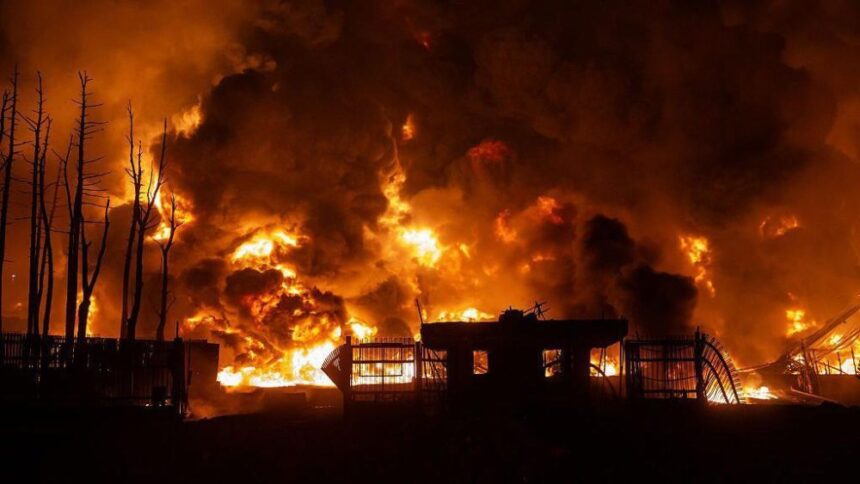
On the other hand, Iran accused the United States of targeting not only military positions but also civilian infrastructure, including bridges, railway facilities, and an airport.
Iranian state media reported that one of the bridges west of Bandar Abbas, in Hormozgan Province, was hit in the attacks.
Iran further claimed that US missiles struck areas near Qeshm Island, located close to the Strait of Hormuz, as well as the cities of Bandar Abbas and Bushehr, where nuclear-related facilities are located.
CENTCOM said its operations targeted military sites, including coastal defense facilities, air defense systems, military equipment, and Iran’s naval capabilities.
Iran also said it had carried out attacks on US military bases in Kuwait and Bahrain, after accusing Washington of striking several locations, including Iranshahr Airport, Bandar Khamir railway station, and five bridges in the port city.
Iran’s state news agency IRNA reported that seven people were killed in the attacks, as both sides continue to intensify their military actions, raising concerns over regional security and potential impacts on global energy markets.
Rwandatribune.rw