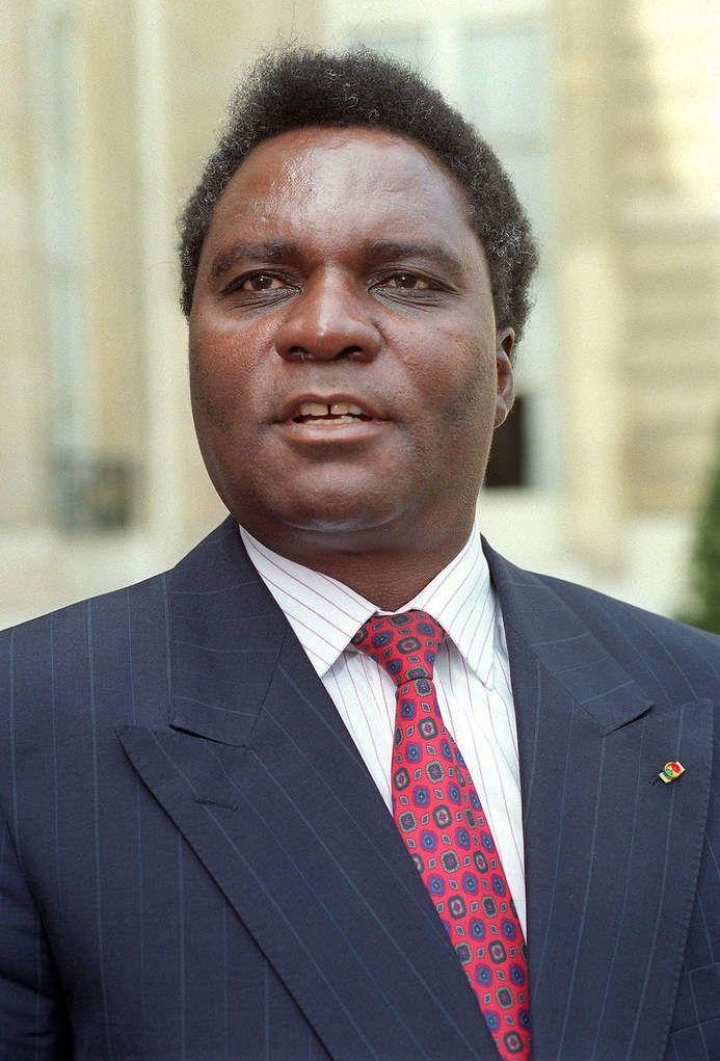
Debate has resurfaced over claims that former Rwandan President Juvénal Habyarimana may have had family roots in present-day Uganda, with historical accounts and media reports presenting differing interpretations of his ancestry.
Habyarimana, who ruled Rwanda from 1973 until his death in a plane crash on April 6, 1994, was born on March 8, 1937, in Gasiza, in the former Gisenyi Prefecture, now part of Rubavu District in northwestern Rwanda.
The renewed discussion focuses on the origins of his father, Jean Baptiste (also referred to in some accounts as Pascal) Ntibazirikana.
According to several historical accounts, Ntibazirikana arrived in the Rambura area in the early twentieth century alongside Catholic missionaries who had travelled from the Kigezi region in present-day southwestern Uganda.
He is said to have served as a catechism teacher before settling permanently in Rwanda.
Records from Rambura Parish, founded by the White Fathers in 1904 at the request of the German Resident of Rwanda, Dr. Richard Kandt, identify an early Christian convert named Ntibazirikana, son of Rugwiro of Ruhara, belonging to the Abangura clan of the Abashyushya lineage. However, the records do not explicitly state his place of birth.
Some researchers argue that Ntibazirikana originated from Kigezi before relocating to Rwanda, while others maintain that the available evidence is not conclusive enough to support that claim.
Historians also point out that before colonial borders were established, communities living in Kigezi, Bufumbira, Gisenyi, and Ruhengeri frequently moved across the region, intermarried, and traded with one another, making it difficult to apply modern national identities to earlier generations.
The Ugandan newspaper Daily Monitor reported on April 1, 2017, that Habyarimana was a Mukiga from Kigezi, while noting that its investigation into the matter was still ongoing. The report cited local residents who claimed Ntibazirikana travelled from Kigezi around 1903 as a porter accompanying Catholic missionaries to Kabgayi before later settling in Gisenyi, where he married Suzanne Nyirazuba and where Habyarimana was born in 1937.
In a separate report, Uganda’s Sunday Monitor quoted John Bakaruhire, also known as Kamashara, who identified himself as Habyarimana’s cousin. Kamashara rejected claims that Habyarimana was originally from Uganda, insisting that he was “a Mukiga from Gisenyi in Rwanda.”
Kamashara further stated that Habyarimana’s grandfather, Ruhara, had several wives and that one of them relocated to Kigezi during the Rumanura famine. According to him, many descendants of that branch of the family still live in Uganda today, a migration he believes may have contributed to later claims linking Habyarimana’s family to Kigezi.
He also maintained that Habyarimana’s father never lived in Uganda and said he personally knew him through family visits in Gisenyi.
Some genealogical accounts trace Habyarimana’s paternal lineage through Ntibazirikana, son of Rugwiro, followed by Ndabateze, Mahinda, Mpaka, Buronko, Nyamwendaruba, Nkwama, Samari, Cyungura (also recorded as Cyuhira in some sources), and Mateke.
To date, no definitive historical evidence has established that Habyarimana himself was of Ugandan nationality or born outside Rwanda. While some published accounts suggest his paternal family had historical links to Kigezi, others dispute those assertions and maintain that the family originated in what is now northwestern Rwanda.
As a result, the question remains a subject of historical debate, with available sources offering differing interpretations rather than a universally accepted conclusion.
Mwizerwa Ally
rwandatribune.rw