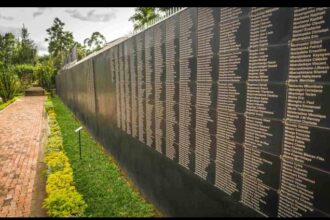
Rwanda’s Minister of Foreign Affairs and International Cooperation, Ambassador Olivier Nduhungirehe, has stated that the Democratic Forces for the Liberation of Rwanda (FDLR) cannot be given a political platform because the group is composed of individuals implicated in the 1994 Genocide against the Tutsi.
He made the remarks following the announcement by the government of the Democratic Republic of Congo (DRC) that it had reached an agreement with the FDLR aimed at dismantling the group and disarming it without the use of military force.
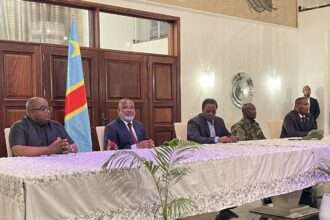
The agreement, reportedly based on a document prepared by FDLR president Victor Byiringiro, was signed on May 30, 2026, before being submitted to President Félix Tshisekedi.
According to the DRC government, the agreement represents a positive step because the FDLR has accepted to lay down its arms, with its fighters expected to be placed in secured centers before being reintegrated into civilian life.
Rwanda has strongly criticized the agreement, arguing that it is not part of the 2025 Washington Peace Agreement and insisting that the FDLR should be dismantled rather than treated as a political actor.
In an interview with BBC Gahuza, FDLR political spokesperson Cure Ngoma said that no timetable had yet been set for impleme
nting the agreement.
He stated: “We have not established a timetable because there are issues that we also want to be resolved first.”
The FDLR is demanding that Rwandan refugees living in the DRC be allowed to return home in conditions that guarantee dignity and security. According to the group, once those concerns are addressed, political competition could then be considered.
However, in an interview with IGIHE, Minister Nduhungirehe stressed that such a scenario is impossible.
He said: “Genocidaires cannot be granted political space. The FDLR must be eradicated as provided for in the Washington Agreement, and its fighters should return to Rwanda without any further conditions.”
Rwanda has been receiving former FDLR combatants who voluntarily repatriate.
They are taken to the RDRC rehabilitation center in Mutobo, located in Musanze District, where they receive civic education and support aimed at helping them reintegrate into society and rebuild their lives.
Various reports indicate that the FDLR wants the repatriation of its fighters to be conducted under special arrangements, including assistance for those who do not wish to settle in Rwanda to find asylum in third countries.
Although Kinshasa says it is working toward dismantling the FDLR, reports suggest that the group has continued to cooperate with the Congolese army (FARDC) in operations against the AFC/M23 coalition, which controls large areas of North and South Kivu.
In June 2026, FDLR and FARDC officials reportedly held meetings in Rutshuru and Walikale to discuss ways in which FDLR fighters could be integrated into or concealed within the Wazalendo militias supported by the DRC government.
There are also reports that the Congolese authorities have maintained contacts with opponents of the Rwandan government living in various countries, and that meetings have been organized between them and FDLR leaders.
Among those reportedly linked to cooperation with the DRC government are Jean-Luc Habyarimana, Thomas Nahimana, Fabien Singaye, and Thaddée Kwitonda, a former senior FDLR leader.
Rwandatribune.rw