As the implementation of the Washington peace agreement continues to be monitored, the issue of the Democratic Forces for the Liberation of Rwanda (FDLR) remains one of the most sensitive points in relations between the Democratic Republic of Congo (DRC) and Rwanda. Statements made by Congolese officials over the years show changing positions on how the government in Kinshasa has portrayed the armed group.
Over the years, some Congolese officials have argued that the FDLR no longer represents a major security threat or questioned the extent of the danger attributed to the group by Rwanda.
Kinshasa has repeatedly accused Kigali of using the FDLR issue to justify its security concerns and its involvement in eastern Congo, allegations Rwanda rejects.
In March 2025, former DRC Foreign Minister Christophe Lutundula said he did not share Rwanda’s assessment that the FDLR remained a major threat.
Following the signing of the Washington peace agreement in June 2025, DRC Foreign Trade Minister Julien Paluku also described the FDLR issue as a narrative that Rwanda had used for decades, arguing that the main issue was Congo’s natural resources.
However, before those statements, senior Congolese military officials had publicly acknowledged the presence of the FDLR on Congolese territory.
In April 2024, FARDC spokesman Major General Sylvain Ekenge said on national television that the FDLR was operating in Congo and had contributed to violence against civilians in the country’s east, describing the group as one of the security challenges facing the government.
In October 2025, the Congolese army issued a statement ordering its soldiers to end any cooperation with the FDLR and called on the group’s fighters to lay down their weapons, warning that military action could follow if they refused.
The move came after the signing of the Washington peace agreement between the DRC and Rwanda, which includes provisions for addressing the FDLR issue through a military framework known as CONOPS.
However, disagreements over how that commitment should be implemented have continued.
A report by United Nations experts released in June 2026 said there were indications of cooperation between some FARDC elements and FDLR fighters in parts of eastern Congo.
The Congolese government has repeatedly rejected similar allegations contained in UN reports, arguing that some findings are biased or inaccurate.
In June 2026, U.S. President’s Special Advisor for Africa Massad Boulos told the UN Security Council that the DRC had not fulfilled its commitment to dismantle the FDLR, at least in areas under government control.
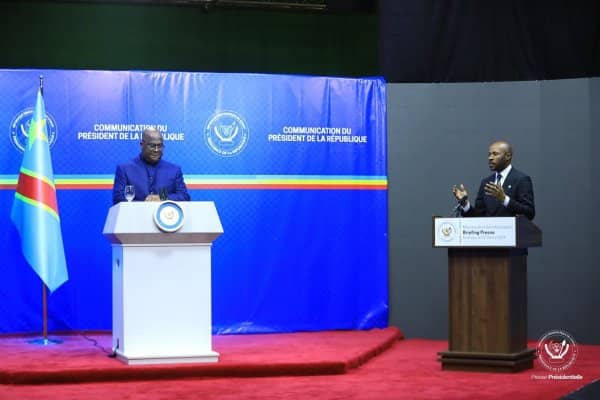
In late July 2026, DRC government spokesman Patrick Muyaya said that if FDLR fighters voluntarily chose to surrender their weapons and enter a disarmament and reintegration process, there would be no reason to launch military operations against them.
His comments followed the circulation of a document allegedly from the FDLR leadership outlining a plan for disarmament.
The Congolese government presented the document as evidence that a peaceful solution could be possible, while Rwanda argued that such an initiative could not replace the obligations contained in the Washington agreement, which requires the dismantling of the armed group.
Analysts say the changing statements from Congolese officials have fuelled debate over Kinshasa’s actual strategy toward the FDLR, as international mediators continue to monitor the implementation of the Washington agreement.
Rwanda maintains that dismantling the FDLR is essential for achieving lasting peace in the region. The DRC, meanwhile, argues that the peace process must address all security challenges in eastern Congo, including other armed groups operating in the area.
Mwizerwa Ally
Rwandatribune.rw