The commemoration of August 2 continues to spark controversy in the Great Lakes region after the Democratic Republic of Congo (DRC) government maintained its annual remembrance of what it calls “Genocost,” describing it as the mass killing of Congolese people allegedly linked to the exploitation and plundering of the country’s natural resources.
The term “Genocost” was officially incorporated into DRC law on December 26, 2022, and was designated as a day to remember Congolese people whom authorities say were killed since 1996.
In 2023, President Félix Tshisekedi led the first official commemoration ceremony, and in 2025 he inaugurated a “Genocost” memorial site in Kinshasa.
During the fourth commemoration ceremony held on August 2, 2026, at the Kinshasa memorial site, President Tshisekedi again accused Rwanda and the AFC/M23 coalition of being responsible for killings he said had been committed against Congolese people over the past decades.
Rwanda Rejects DRC’s “Genocost” Narrative
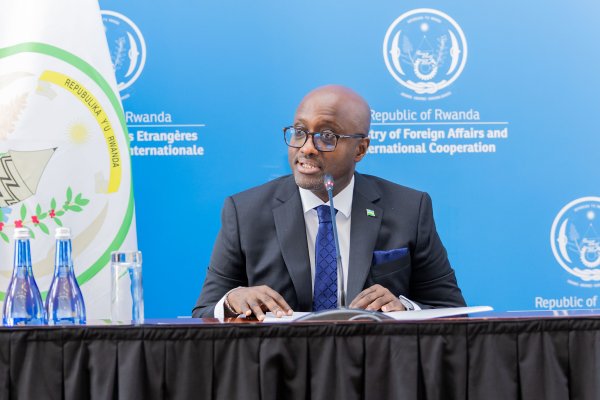
Following Tshisekedi’s remarks, Rwanda’s Minister of Foreign Affairs, Ambassador Olivier Nduhungirehe, criticized the DRC’s “Genocost” campaign, saying Kinshasa was presenting itself as a victim while ignoring what he described as its own history of targeting Congolese Tutsi communities.
Speaking in an interview with Agasaro Kaburanga, Nduhungirehe said that August 2, 1998 — the date linked by DRC authorities to the “Genocost” commemoration — was instead a day marked by attacks against Tutsi communities in Congo.
“What Congo is doing is deliberate. On August 2, 1998, the day they describe as Genocost remembrance day, terrible events took place, especially in Kinshasa, where Tutsis were openly targeted,” Nduhungirehe said.
He claimed that many Tutsis were pursued, abused and killed, adding that there are photographs and videos documenting those incidents.
Dispute Over Statements by Abdoulaye Yerodia
Nduhungirehe also referred to statements made by Abdoulaye Yerodia Ndombasi, who served as DRC Foreign Minister in 1998, accusing him of using language targeting Tutsi communities.
He said Ndombasi had faced accusations by Belgian justice authorities over alleged war crimes and crimes against humanity, but that the DRC never prosecuted him domestically.
Ndombasi died on February 19, 2019, after President Félix Tshisekedi granted him a state funeral.
DRC Takes Case to the ICJ
On June 26, 2026, the DRC government filed a case against Rwanda at the International Court of Justice (ICJ), accusing it of genocide-related crimes allegedly committed from 1996 to the present.
The move is part of Kinshasa’s efforts to gain international recognition for what it calls “Genocost” and to accuse Rwanda of involvement in Congo’s security crisis.
Debate Over FDLR
Nduhungirehe further argued that the DRC should not promote the “Genocost” narrative while continuing cooperation with the FDLR, a group Rwanda accuses of having participated in the 1994 Genocide against the Tutsi.
“The FDLR is a group that committed genocide in Rwanda. You cannot claim to mourn genocide while working with a group that committed it,” Nduhungirehe said.
So far, no country has officially announced support for the DRC’s international campaign to promote “Genocost,” and no government has publicly joined the initiative.
Rwandatribune.rw