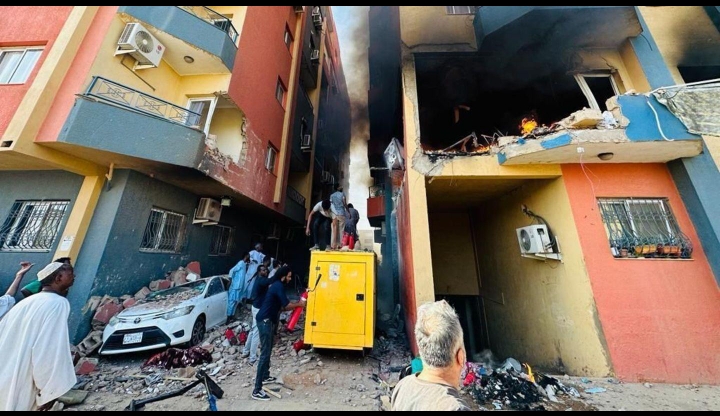
As Sudan’s devastating war continues to kill civilians, deepen a catastrophic humanitarian crisis and force millions from their homes, questions are mounting over the response of major international powers — particularly the United States.
The conflict, which began in April 2023, pits the Sudanese Armed Forces (SAF) led by General Abdel Fattah al-Burhan against the Rapid Support Forces (RSF) commanded by Mohamed Hamdan Dagalo (Hemedti).
What started as a power struggle between rival military leaders has evolved into one of the world’s gravest humanitarian emergencies.
Although the exact number of deaths remains difficult to verify because of restricted access and the collapse of many state institutions, humanitarian agencies estimate that thousands have been killed and millions displaced.
As reports of widespread suffering continue to emerge from Sudan, critics have increasingly asked why Washington has not assumed a more visible and forceful role, especially when compared with its response to other major international crises.
Sudan is not at the top of Washington’s foreign policy agenda
Analysts say one explanation for the relatively limited US engagement is that Sudan is not currently among Washington’s highest strategic priorities.
In recent years, US foreign policy has focused heavily on Russia’s war in Ukraine, tensions across the Middle East, and growing competition with China. These issues have consumed significant diplomatic, military and financial attention.
Sudan’s location along the Red Sea gives it undeniable strategic importance, as the waterway is a crucial corridor for global trade and security. However, experts note that the conflict is not widely viewed in Washington as an immediate threat to core American national interests, which helps explain the lower level of political urgency.
A cautious approach after decades of military intervention
Another major factor is the United States’ growing reluctance to become directly involved in another overseas war.
Following the costly and prolonged military campaigns in Afghanistan and Iraq, successive American administrations have become increasingly cautious about deploying troops or taking actions that could lead to deeper military entanglement.
As a result, the US response to Sudan has focused primarily on:
Diplomatic pressure on the warring parties;
Critics argue that these measures have failed to halt the violence or provide meaningful protection for civilians trapped in the fighting.
A conflict shaped by wider regional interests
Sudan’s war is no longer seen simply as an internal political dispute.
Because of its strategic position near the Red Sea and its political and economic significance in Africa, the conflict has drawn the attention of regional and international actors with competing interests.
This has complicated diplomatic efforts. Stronger intervention by any major power could affect its relations with governments that have political, security or economic stakes in Sudan and the broader Red Sea region.
The result is a highly complex international environment in which external actors often prefer cautious diplomacy to decisive intervention.
Has Washington ignored Sudan?
Despite accusations of neglect, US officials insist that Sudan remains an important focus of American diplomacy and humanitarian policy.
Washington has:
provided humanitarian funding for relief operations;
Nevertheless, many Sudanese civilians facing displacement, hunger, disease and insecurity believe these efforts have been far too limited compared with the scale of the catastrophe unfolding across the country.
A broader debate over attention to African conflicts
The war in Sudan has also revived a wider debate about whether African conflicts receive the same level of international attention as crises in other parts of the world.
Some analysts argue that conflicts occurring in regions considered strategically vital to major powers tend to attract faster diplomatic engagement, greater media coverage and stronger political responses.
For these observers, Sudan has become a painful example of a humanitarian disaster that has struggled to remain at the centre of global attention, despite the enormous human suffering involved.
More than three years after the fighting began, Sudan remains trapped in a brutal conflict with no clear military or political resolution in sight. While the United States has pursued sanctions, diplomacy and humanitarian assistance, its response has appeared less visible and less assertive than many Sudanese and international observers had hoped.
Whether this reflects strategic calculation, diplomatic caution or the constraints of a crowded global agenda, the perception of American silence continues to fuel criticism as Sudanese civilians bear the devastating human cost of a war that the world has struggled to stop.
Targeted sanctions against individuals accused of fuelling the conflict;
imposed sanctions on individuals linked to the conflict;
Humanitarian assistance for displaced and vulnerable populations;
supported international initiatives seeking a ceasefire and political transition.
Support for international mediation efforts aimed at securing a ceasefire and a political settlement.
Rwandatribune.rw