Joseph Kabila Kabange, the former President of the Democratic Republic of the Congo (DRC), has been appointed head of the Front pour la Refondation de la Nation (FRN), a newly formed coalition that includes senior leaders of the AFC/M23 alliance.
The appointment marks a new development in his political engagement with a camp opposed to the government of President Félix Tshisekedi.
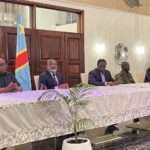
Under the coalition’s leadership structure, Corneille Nangaa, the coordinator of AFC/M23, Bertrand Bisimwa and Freddy Kaniki have been appointed as Kabila’s deputies. General Sultani Makenga, who commands the M23 military wing known as the Congo River Alliance (ARC), has been named Chief of Staff of the coalition’s armed forces.
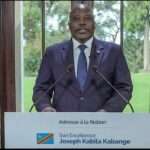
The announcement comes days after Kabila addressed the Congolese people on October 9, 2026, delivering a strong criticism of Tshisekedi’s leadership, particularly regarding national security, the conflict in eastern DRC and the government’s approach to resolving the country’s political crisis.
In his address, Kabila accused Tshisekedi’s government of prolonging the war against AFC/M23 without demonstrating sufficient willingness or capacity to defeat the armed group.
He said that since Tshisekedi took office in January 2019, the Congolese Armed Forces (FARDC) had continued to suffer setbacks on the battlefield, while the government had opted to pursue the military campaign.
“On security, despite the repeated defeats suffered by the Armed Forces of the Democratic Republic of the Congo since the current administration took responsibility for their leadership, it has chosen to continue the war for political reasons, despite clearly lacking the will or the capacity to win it,” Kabila said.
The former president also criticized the government’s handling of the security crisis, arguing that continuing the war could not, on its own, provide an adequate solution to the challenges facing the country.
Among his accusations, Kabila cited alleged violations of the ceasefire agreed upon in Doha, cooperation with armed groups, including Wazalendo and the Democratic Forces for the Liberation of Rwanda (FDLR), and the government’s unwillingness to pursue inclusive national dialogue that would bring together different political actors to seek lasting solutions to the country’s political and security problems.
Kabila further said that the recommendations and proposals he presented in an address on May 23, 2025, had been ignored. He argued that the situation in the DRC had continued to deteriorate rather than move towards tangible solutions.
He stressed that the country was facing a critical period and said he intended to continue sharing his views with the Congolese people on measures they should collectively implement in the coming hours, days and weeks to address the country’s challenges.
The development comes as the conflict in eastern DRC remains one of the country’s most serious security challenges.
Government forces and various armed groups continue to clash, with civilians bearing much of the impact of the violence.
Kabila’s appointment as head of the FRN, alongside the elevation of senior AFC/M23 figures to key leadership positions, publicly sets out the coalition’s leadership structure and the roles assigned to its principal figures.
However, further details about the coalition’s objectives, operations and long-term strategy have not yet been provided in the available information.
Rwandatribune.rw