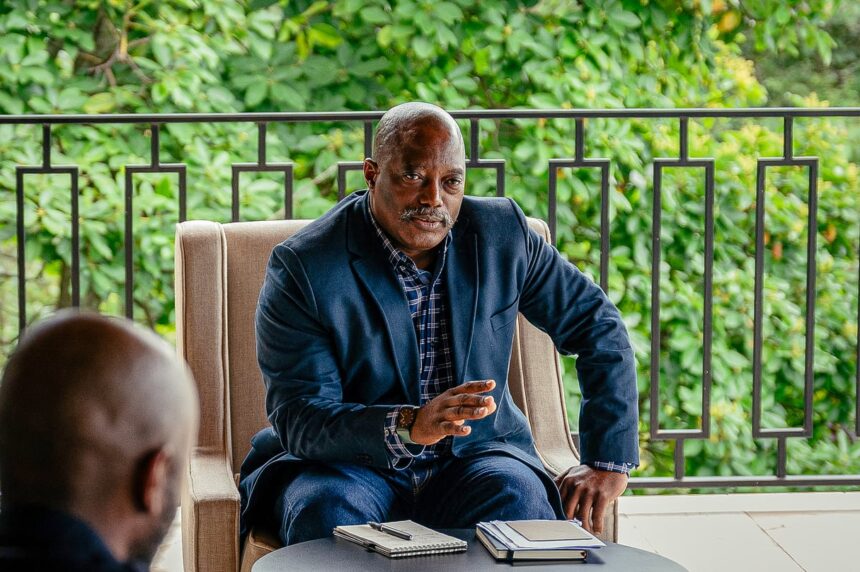
Political analyst Patrick Mbeko has said that Joseph Kabila’s decision to stay in territory controlled by AFC/M23 should not be interpreted as evidence of a long-term cooperation agreement with the movement, but rather as a temporary convergence of interests and a form of tactical cooperation.
Mbeko made the remarks on Thursday during a Space Live discussion hosted by journalist Stanis Bujakera Tshiamala, where he discussed the reasons why Kabila did not return to Kinshasa and explained how he views Kabila’s relationship with AFC/M23.
According to Mbeko, the problem began even before Kabila decided to return to the Democratic Republic of Congo.
He said that some of Kabila’s close associates had been arrested, others subjected to political pressure or persecution, and that some of his property had been seized by the authorities.
Mbeko argued that anyone facing such circumstances could not reasonably be expected to return to Kinshasa without security guarantees.
In his view, the Kinshasa government should have allowed Kabila to return normally and, if there were accusations against him, pursued them afterward instead of first targeting those around him and his assets.
He said such actions amounted to sending him an advance warning of what awaited him should he return to Kinshasa.
He added that, in such a context, it is understandable for a former president to choose to stay in an area where he feels safer than elsewhere.
When asked whether Kabila’s presence in AFC/M23-controlled territory meant that he had a strong political alliance with the group, Mbeko explained that they share a common opposition to the current government in Kinshasa.
He added that this convergence of views does not concern only Kabila and AFC/M23, noting that there are also opposition figures in the capital who hold similar views regarding the current leadership.
However, he rejected the idea that this constitutes a long-term political alliance, describing it instead as a tactical convergence and a temporary alignment of interests.
He stressed that people may share a common problem or perceive the same adversary in a similar way, but that does not automatically mean they share the same political project or long-term objectives.
Regarding accusations by Kinshasa that Kabila is collaborating with AFC/M23 rebels, Mbeko said he does not believe those allegations at all.
In his opinion, such claims may be accepted by supporters of the government, but international observers tend to see the situation differently, viewing Kabila as being in political exile, staying where he believes he is safe because he did not feel secure in areas controlled by Kinshasa.
Mbeko also referred to the dialogue initiative previously promoted by Angola, noting that it called for all Congolese political actors to be included in talks without discrimination.
For him, there is an inconsistency in the Kinshasa government accusing Kabila of collaborating with AFC/M23 while it has itself engaged in negotiations with the same movement.
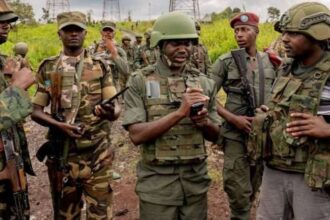
Mbeko further focused on distinguishing the original M23 movement from the AFC coalition led by Corneille Nangaa.
He said that the original M23, especially in its early stages, was primarily focused on security issues and the interests of Congolese Tutsis in eastern DRC.
By contrast, the political AFC coalition led by Nangaa has broader political ambitions, including changing the government in Kinshasa. According to Mbeko, the two branches do not necessarily share the same objectives or the same methods for achieving them.
He also stated that, in his assessment, Rwanda has already gained significant influence in North and South Kivu, and could therefore see advantages in the current situation prevailing in eastern DRC.
At the same time, he argued that AFC’s political wing seeks to bring about major changes at the level of the entire Congolese state, which is different from the security and ethnic concerns that were more prominent in the early M23 movement.
In conclusion, Patrick Mbeko emphasized that AFC/M23 is not a single, ideologically unified movement, but rather a coalition that includes groups with different interests, perspectives, and objectives.
He said that understanding those differences is essential for grasping the current dynamics of the conflict in eastern DRC, where security concerns, political interests, ethnic tensions, and the interests of neighboring countries are all intertwined.
According to him, viewing AFC/M23 as a single homogeneous group without internal differences risks obscuring the true nature of the crisis that continues to destabilize the eastern part of the Democratic Republic of Congo.
Rwandatribune.rw