Kinshasa – The Council of Catholic Lay Apostolate Organizations in the Democratic Republic of the Congo (CALCC) has expressed its full support for the National Episcopal Conference of Congo (CENCO) in rejecting the government’s proposed constitutional reform, calling on Congolese citizens to stand up in defense of the nation’s common interest.
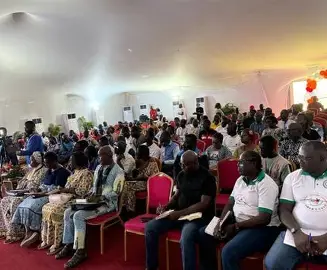
The declaration was made during a Mass held at the Cathedral Notre-Dame du Congo in Kinshasa, presided over by Cardinal Fridolin Ambongo as part of the celebrations marking the 66th anniversary of the Democratic Republic of the Congo’s independence.
In its statement, CALCC argued that there is no compelling justification for amending the Constitution while the country continues to grapple with major challenges, including insecurity, widespread poverty, and a lack of justice.
According to the organization, the DRC’s immediate priorities should be restoring peace, improving security, and enhancing the living conditions of its citizens rather than pursuing constitutional amendments that could jeopardize the country’s future.
During the Mass, CALCC also warned against the risk of the nation being governed in the interests of a small group of individuals instead of serving the broader public.
The statement read:
“The people are hungry for peace, hungry for security, and hungry for justice—not for a new Constitution designed to serve the interests of one individual or a small group.”
The message reinforces CENCO’s position announced in recent days, in which the Catholic bishops stated that they see no urgent, necessary, or justified reason to amend the Constitution at this time.
CENCO maintains that the government should instead prioritize addressing the deteriorating security situation in eastern DRC, where armed groups continue to fuel violence and instability.
The proposed constitutional reform has sparked intense political debate across the country. The ruling coalition argues that the amendments could strengthen state institutions and promote national development. However, opposition parties, civil society organizations, and the Catholic Church insist that the country’s real priorities lie in restoring security, improving governance, and addressing the daily hardships faced by the population. The debate comes as eastern DRC remains plagued by ongoing fighting between government forces and several armed groups, including AFC/M23 and ADF, further deepening concerns over civilian security and the country’s long-term stability