The Government of Rwanda has strongly criticized recent sanctions imposed by the United States on several Rwandan mineral companies and their executives, describing the measures as unfair and ineffective. The US accuses the sanctioned companies of playing a key role in supporting the M23 rebel movement operating in eastern Democratic Republic of the Congo (DRC).
This is Rwanda’s first official public response to the sanctions announced last Thursday by US Treasury Secretary Scott Bessent. He said the United States would not allow armed groups to profit from the illegal trade in minerals or continue fueling instability in the Great Lakes region.
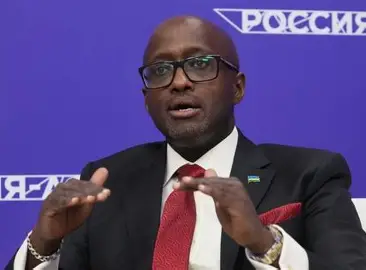
In an interview with France 24 on Monday, Rwanda’s Foreign Affairs Minister, Olivier Nduhungirehe, questioned why Rwanda alone was being sanctioned despite the peace agreement signed in December 2025 between President Paul Kagame and DRC President Félix Tshisekedi, under US mediation. According to Nduhungirehe, the agreement places obligations on both countries.
“We are disappointed that the United States, as a mediator, is becoming increasingly biased,” Nduhungirehe said.
When asked why Rwanda still trusted the US as a peace mediator if it considered Washington biased, Nduhungirehe replied that Rwanda remains committed to peace and has taken concrete steps to implement the peace agreement. However, he argued that lasting peace cannot be achieved if only one party fulfills its commitments while the other does not.
He emphasized that the DRC had committed to a ceasefire and to dismantling the FDLR, an armed group Rwanda considers a major security threat. Rwanda insists that these commitments must also be implemented.
The DRC government maintains that it has intensified military operations against the FDLR and says any Congolese soldier found cooperating with the group will be punished. Kinshasa also insists that Rwanda must withdraw its troops from Congolese territory and respect the country’s sovereignty.
Nduhungirehe further argued that sanctions are not the role of a peace mediator and warned that punishing only one side risks encouraging the other side rather than promoting peace.
Meanwhile, Treasury Secretary Scott Bessent defended the sanctions, saying that Congo’s mineral wealth belongs to the Congolese people and that, under President Donald Trump, the United States will continue targeting individuals and entities responsible for violence, illegal exploitation of resources, and attacks against Congolese civilians.
The Congolese government welcomed the sanctions, calling them another important step in disrupting the financial networks sustaining the conflict in eastern DRC. Government spokesperson Patrick Muyaya said on X that the measures remind Rwanda of the urgent need to end its alleged interference in Congolese affairs.
The sanctions target Gasabo Gold Refinery Ltd, a Kigali-based gold refinery, its chairman Jean Malic Kalima, and General Manager Bosco Kayobotsi. The US also sanctioned Bugambira Mines Ltd, Wolfram Mining and Processing Ltd, and Rwinkwavu Mining Corporation Ltd, alleging that Kalima controls these companies as well.
The BBC said it contacted Gasabo Gold Refinery and Kalima for comment but had not received a response.
These sanctions follow earlier US measures imposed this year against the Rwanda Defence Force (RDF) and four senior Rwandan generals accused of involvement in the conflict in eastern DRC.
The DRC, the United States, and United Nations experts accuse Rwanda of supporting the M23 rebel group by providing troops, training, command support, and operational coordination. UN experts estimate that Rwanda has between 6,000 and 7,000 soldiers inside eastern DRC.
Rwanda denies these allegations, insisting that it has only adopted defensive measures to protect its national security against threats posed by the FDLR, which operates from eastern Congo.
Last year, the European Union also sanctioned Gasabo Gold Refinery, accusing it of importing gold illegally from M23-controlled areas in eastern DRC and benefiting from the conflict.
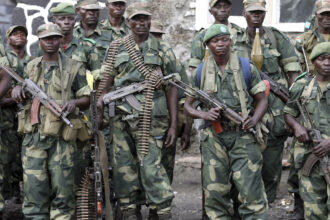
The M23 currently controls large parts of North Kivu and South Kivu, including the strategic cities of Goma and Bukavu, areas rich in mineral resources. According to the United States, the rebel group uses revenues from these minerals to purchase weapons, pay fighters, and finance operations. M23 has consistently denied allegations of committing abuses against civilians.
Mwizerwa Ally
Rwandatribune.rw